

By Fred Paillet, OS Education Chair
“Rocket Science” has for a long time been taken as a catchword for the ultimate in technical complexity. That’s usually in the context of comparison with computations that ought to be guided by common sense. In that vein, the title of this piece might be interpreted as suggesting that all the fuss about global warming is being given way too much hype. The weather is something we all experience every day, and climate is just the average of that experience over longer time intervals. The temperature changes by tens of degrees during the average day. Why all the worry over an average degree or two? Here I am taking the same trope in EXACTLY the opposite sense. Climate change as a study is NOT rocket science only because it is MUCH more complex. Let me explain how that is, along with reflections on my own specific battle with that subject. If you remained unconvinced about the complexity of the atmospheric carbon cycle you can get the full story in glorious detail from: The Story of CO2 is the Story of Everything, by Peter Brannen (2025) reviewed here in this Pack and Paddle issue.
The basic issue is one of extrapolation. Machine learning is a process whereby we use computers to examine data sets to find reliable patterns that we can use to predict trends in future events. AI is just the extension to bigger and faster computers learning from so much larger data sets. Newton formulated his laws of motion and gravitation by finding patterns that could be rigorously extended to predict new measurements according to specific formulae. Using those equations can involve some complicated computations, which NASA once handed to groups of young ladies collectively called “computers”, but are now easily carried out by inanimate digital machines. Today, we are used to seeing astronauts placed in orbit and satellites providing precise global positioning information. There are robots driving around on Mars, and space probes streaming information from the far reaches of the solar system. Although you may not think about it, these efforts require extending our technology to places where humans had never gone before. The issue is that Newton’s laws may have fit to our earthbound data set, but they do not extrapolate to outer space environments and orbital velocities. Relativity gets in the way. Our GPS systems require corrections in time-of-travel measurements attributed to local relativistic variations in velocity and gravitation (time dilation). When signals travel at the speed of light, these few microseconds in correction make all the difference. If we had extrapolated our rocket science to these unexperienced conditions using Newton’s laws, our rockets might not make it. In the case of climate change we know that climate is very sensitive to atmospheric composition, and we recognize that we are headed for conditions where we have no data without any fundamental theory to guide us. That’s why climate change is not just rocket science, but something much more complicated.
The magnitude of this disconnect is encapsulated in a probably fictional statement attributed to famous physicist Werner Heisenberg. When asked by a colleague late in life what mysteries he hoped to see explained upon reaching his ultimate reward, he supposedly replied: Why quantum mechanics? Why turbulence? The turbulent mixing of atmospheric gasses and the thermal energy transported by water vapor are the driving forces behind our weather patterns. We have established laws of relativity to extrapolate computations about rocket performance in remote outer space but have no such reliable and fundamental laws about turbulent mixing along developing weather fronts.
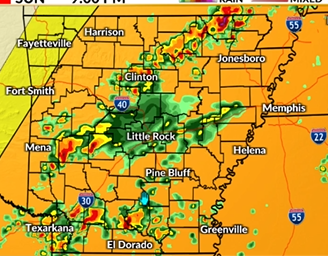
Weather forecasts have gotten noticeably more accurate over the years as machine learning has become better at identifying patterns in expanding data sets provided by proliferating atmospheric soundings and satellite information. How long can we rely on application of these data-derived extrapolations to conditions where there are no reliable measurements? In high school math you probably did a little regression, fitting a straight line to run through a group of points. You can often get a much better fit to the set of points by allowing the linear fit to have some curvature. But that curvature allows the line to wander farther away from the general trend when extended beyond the established set of data points. This is the problem we face when extending empirical weather data algorithms into unknown climate territory. Let me start by relating my own first disconcerting encounter with the theory of turbulence.
Having survived freshman classes in mechanics and sophomore classes in electrodynamics, I approached a junior year class in fluid mechanics with confidence. Our initial class problem was computing the flow inside a pipe with a simple balance between the resistance of viscosity and the driving force of a pressure gradient. The governing equation was easily integrated to get the parabolic distribution of flow velocity across the width of the pipe. No Problem! Then the instructor indicated the problem was not solved. He said we cannot accept the solution without proving it stable to all possible infinitesimal disturbances. After years of study of differential equations, it was disconcerting to discover that the solutions of perfectly sound equations may not always be trusted. We learned that pipe flow is not always stable, and the relation between pressure gradient and flow depends upon the difference. If the flow becomes unstable (turbulent) then the consequences can be significant for practical applications ranging from water distribution to chemical processing. Furthermore, the properties of the flow system must be determined by experiment since we have no universal underlying theory of turbulent transport to rely on. The general study of turbulence is described as “chaos theory” with nothing analogous to Newton’s laws or their extension into relativistic velocities. Our best global climate models deal with this by using empirically derived “mixing lengths” to estimate the way that energy is transported around the globe by our weather systems. What guarantee do we have that parameters experienced under the present climate will be valid in the future?
So far, I have discussed just theoretically possible miscalculation in extending empirical climate data into new conditions. Climatologists describe the “butterfly effect” where the flutter of a butterfly’s wings in one hemisphere can cause a weather disturbance in another. Is there real proof that such small disturbances can create “bifurcations” of events as seen in chaos theory calculations? In the case of pipe flow, Reynolds (of Reynolds Number fame) was able to keep stable flow at unexpectedly high rates going in carefully cushioned pipes, but applause and stomping of feet in an adjacent Cambridge University Hall reliably resulted in transition to turbulence. Later theoretical studies proved that the parabolic pipe flow was stable to ALL possible infinitesimal disturbances, so must require a small but finite jar to trip into chaos. Exactly how that happens remains a mystery. Now, think of how many possible climate regime-shifts there could be in a complicated atmospheric flow system fueled by the energy density of water vapor, with a flow field geometry influenced by the path of oceanic currents and the trajectory of jet stream boundaries. With global warming we are headed into unknown territory without a useful scientific map with which to plan our journey. How can we rely on advanced AI to learn from climate data that applies to an environment we have yet to experience?
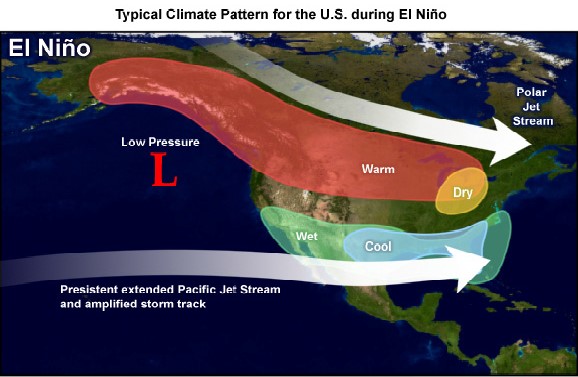
If you think that the theoretical bifurcations in the application of chaos theory to climate are vague, consider the one definite bifurcation we have seen in action and its serious consequences. El Nino events are well documented as abrupt shifts in the turbulent transport of heat energy via ocean currents such that the desert coast of Peru suffers catastrophic flooding and eastern Australia experiences drought and fire. This seemingly spontaneous reorganization of the Pacific’s wind-driven current is just such a bifurcation. When I hear on the TV that meteorologists are spotting signs that an El Nino event might be developing, I think of Roman augurs seeking portents by inspecting chicken entrails. Both Romans and meteorologists were being handicapped by not knowing the fundamental laws governing their prognostication. The El Nino events are even more puzzling because dated geological sediments indicate that El Nino events have been absent in the recent past when climatic conditions were not so different from today. My personal feeling is that a lot of complacency about global warming is based on the wonders of our technical accomplishments.
If we can provide precise GPS coordinates, put robots on Mars and image the distant galaxies, we can certainly use our technology to find our path forward no matter what the climate has in store for us. In that sense our confident conquest of the once seemingly insurmountable world of rocket science generates a false sense of security. In WWII Nazi Germany started out as the most technically advanced society in the world, which is why its army was so confident that it could overwhelm the Bolshevik chaos of the USSR. We all know how well that worked out.